
Start with the Placer County Residents Question
A useful residents directory search starts by naming the fact you need. The current owner of a parcel is a different record subject from a registered voter, a court party, a licensee, or a person named in an old directory. Placer County stretches from the Sacramento edge through Gold Country foothills to North Lake Tahoe. Custody changes with the question and with the jurisdiction. A parcel may sit in an incorporated city even when a nearby postal place is unincorporated. Begin with an address when you have one. It is usually more stable than a common name.
The county tax search and GIS maps can establish a situs and APN. The Recorder index can then connect a parcel to grantors, grantees, documents, and recording dates. Court, vital, business, license, and archive sources add different kinds of identity evidence. None proves every person at an address. A directory entry is a dated snapshot. A deed identifies a recorded transaction. A voter record is protected by purpose and access rules.
- Write down the exact address, postal city, ZIP, and any APN or document number already known.
- Use the county GIS gateway or parcel map to confirm the parcel and whether city or county jurisdiction holds related records.
- Open the tax account with its supported parcel or assessment identifier, then note the situs and mailing fields separately.
- Use the Recorder's grantor-grantee index for a recorded owner trail, and order or inspect the image only through the documented office route.
- Choose the library, court, vital-record, archive, or CPRA channel that matches the remaining question.
Note: A name is a lead; an APN, case number, dated entry, or legal description is the stronger control.
Where Placer County Keeps Resident Records
Placer County does not have one office that maintains a complete resident list. The Clerk-Recorder keeps recorded instruments and local vital records. The Assessor and Treasurer-Tax Collector expose parcel and tax information through separate tools. Elections maintains the registration system, but California makes the public status screen a self-lookup rather than a reverse household directory. Superior Court keeps case records. The library and County Archive provide the historical shelf.
Placer County Clerk-Recorder
Real Property Records
3715 Atherton Road, Rocklin, CA 95765
530-886-5600
Real-property index and counter records
Placer Assessor / Tax Collector
Parcel and tax information
Address/APN search route
County web access
Parcel and tax information
Placer County Elections
Registration and voter files
Auburn, California
530-886-5650
California self-status route
Placer County Archive
Historic county records
Appointment required
530-889-7789
Appointment-based archive route
Use the office that owns the record. The county CPRA page says requests may go to the responsible department by person, phone, or writing, and the Clerk of the Board receives multi-department requests at 175 Fulweiler Avenue in Auburn. A focused request names the record, date range, address or APN, and desired format.
Placer County Parcel-to-Resident Search
The most productive current route is address first. The county's GIS gateway can locate a parcel by address or map click, while the Assessment Inquiry uses a 12-digit Fee Parcel Number, a 12-digit Assessment Number, or an aircraft tail number after its agreement screen. That distinction matters. Do not assume the tax page accepts a street string simply because GIS does. Carry the identifier from one tool to the next.
Record four separate values in your notes: situs address, owner mailing address, APN or assessment number, and legal description. The situs marks the taxed location. Mailing information directs tax correspondence. A legal description identifies the land through a subdivision lot or metes-and-bounds description. Matching mailing and situs addresses may support an occupancy clue, but it cannot establish everyone at the parcel.
| Property search field | How Placer County uses it |
|---|---|
| Fee Parcel Number | 12-digit identifier accepted by Assessment Inquiry. |
| Assessment Number | 12-digit alternative account key. |
| Property address | Use the GIS gateway for the address-to-parcel step. |
| Owner name | Do not promise a general Internet name search because Government Code §7924.205 limits online assessor posting by assessee name. |
| Tax year | Current or prior choices depend on the live tax interface; roll data reflects the January 1 lien date. |
Once the parcel is stable, open the Recorder index. A fresh deed can appear there before the Assessor's roll changes. That timing is a practical clue when a tax page seems behind a recorded transaction. It is also why a residents directory assembled from one source can misstate the date of an ownership change.
The Placer property tax search is the parcel-account starting point for this part of the trail.
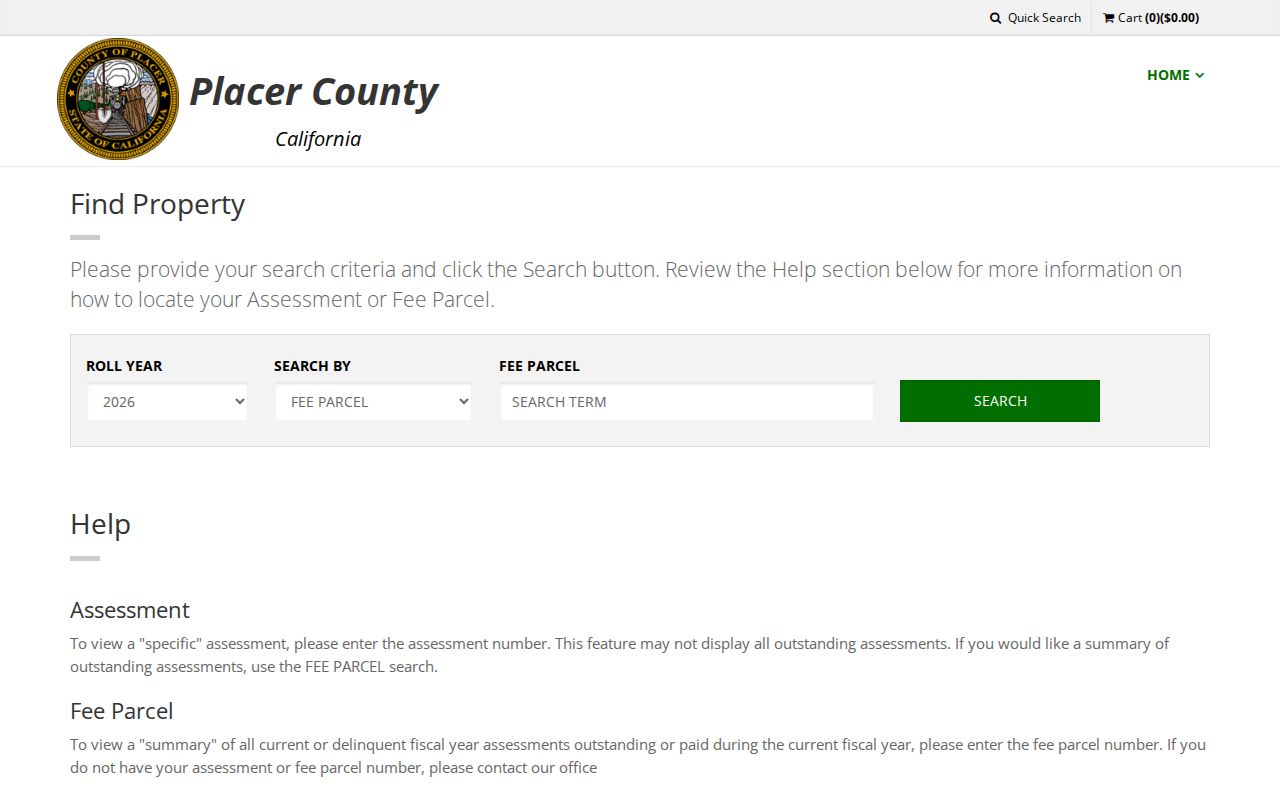
The property search reference shows why an address or parcel key matters before a person name is attached to the record.
Placer County Deeds and Owner Trails
Placer County's Recorder public index is a grantor-grantee index. It supplies party names, instrument type, recording date, document number, and reference information. The index is free to inspect online through the linked CountyFusion application, but scanned instrument images are not posted for remote viewing. The image can be researched at the Recorder counter or requested by document reference through the office's copy channels.
For a backward trail, start with the current acquisition instrument. Read the grantee as the new recorded owner and the grantor as the seller or transferor. Search that earlier grantor as a prior grantee, then move back in time. Check the APN and legal description at each turn. Subdivision, lot-line, and account changes can make a name-only chain jump to the wrong parcel.
Noncertified official copies are listed at $2 for the first page and $1 for each additional page on the real-property page. The Recorder's fee page also describes certification and additional delivery charges, so confirm the total with the counter. Mail requests should include document type, parties, recording reference, daytime phone, mailing address, payment, and preferably a self-addressed legal-size envelope.
Note: A courtesy ownership-change letter is a notice, not proof of fraud; compare the document number, APN, and legal description before acting.
For a closer walk through the parcel, deed, permit, and street sequence, use the Placer County street directory page. It keeps the address chain separate from the historical and one-person searches.
Placer County Voter Lookup Rules
California My Voter Status is useful when the person performing the search is the registered voter. The form asks for first name, last name, full date of birth, and either a California driver license or ID number or the last four digits of a Social Security number. The result can report registration location and status, party preference, ballot status, polling place, and election information. It is a private authentication flow, not a name-and-address directory for strangers.
A fuller voter file requires an application, a qualified purpose, approval, and payment. Elections Code §2194 and 2 CCR §§19001–19013 control the permitted uses and the data that may be released. Placer's 2025 application describes walking or precinct lists, countywide electronic files, histories, labels, delivery choices, and intended-use certification. A walking list may sort by street and house number, but it remains a restricted file rather than a public browse tool.
| Route | What it can show | Who can use it | Boundary |
|---|---|---|---|
| My Voter Status | Authenticated registration and election details | The voter completing the match | Self-only identity check |
| State voter-file request | Approved voter data and optional history | Qualified requester | Application, purpose, fee, exclusions |
| Placer Elections list request | County, precinct, or walking-list formats | Approved requester | Agreement against misuse or harassment |
Confidential voters and protected addresses must stay out of an ordinary lookup. The voter system can confirm an authenticated person's record, or release a lawful extract to an approved requester, but it cannot serve as an unrestricted residents directory.
The California My Voter Status form shows the self-authentication route and its required identity fields.
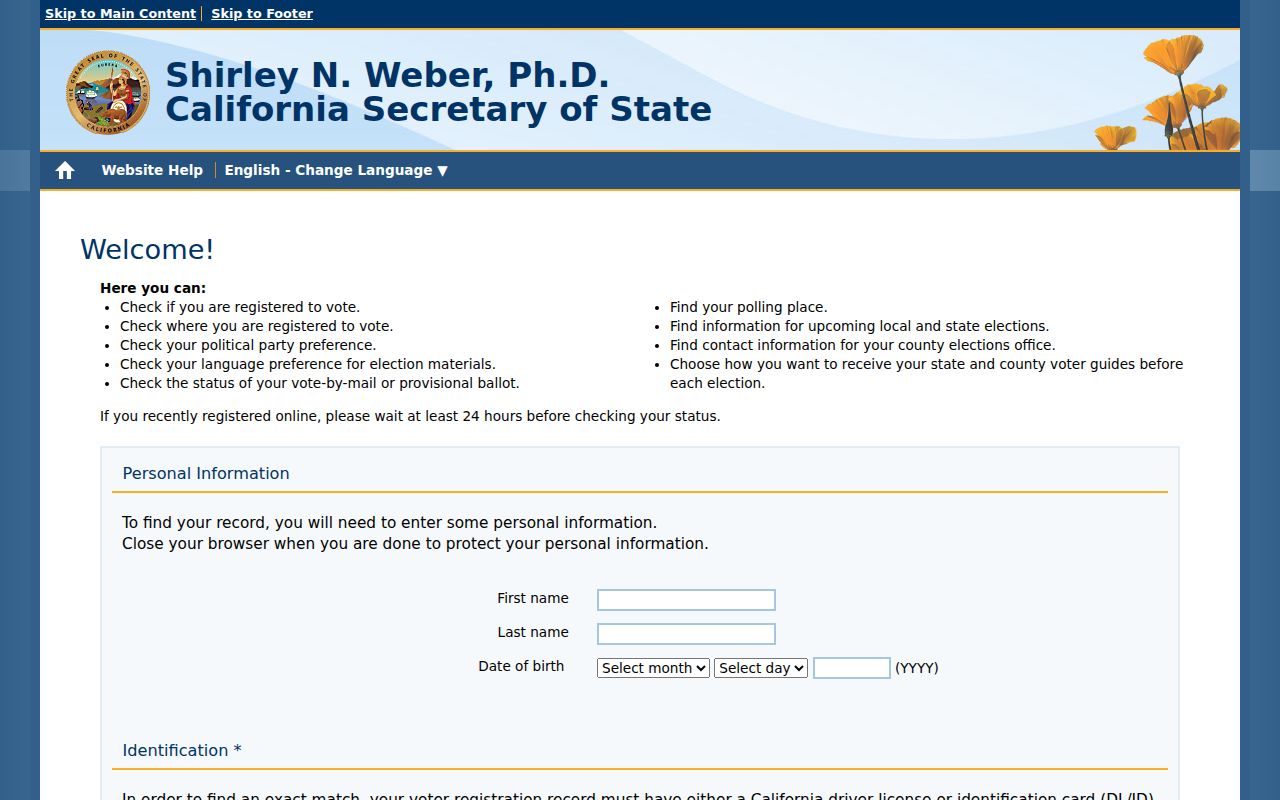
The voter reference reinforces the difference between a private status check and a qualified voter-file request.
Today's Placer County Directory Sources
Current directory-like sources answer different questions. The tax and Recorder systems are strongest for property ownership and recorded parties. The court portal is a case index, not a residence register. A license or business filing places a person in a professional or organizational record. Voter data is controlled by authentication and qualified-use rules. A source earns trust when the result is matched to the right custodian and the right date.
| Source | Record subject | Keeper | Access route |
|---|---|---|---|
| Property tax and GIS | Parcel, situs, tax account, displayed ownership fields | Assessor / Treasurer-Tax Collector | Address, map, or parcel route |
| Recorder index | Grantors, grantees, instruments, dates | Clerk-Recorder | Free index; image counter or copy request |
| My Voter Status | Authenticated voter's status and polling information | California Secretary of State | Self-authentication |
| Superior Court portal | Parties, cases, filing dates, status | Placer Superior Court | Public case search; restricted files |
| Business and license indexes | Entity roles or professional credentials | California SOS or DCA | Free state searches; fields vary |
There is no single Placer County residents directory that combines these records. A good match keeps the role visible: owner, grantee, case party, licensee, registrant, or historical occupant. That language prevents a record from quietly becoming a claim about current residence.
The California DCA license search is one example of a role-specific state lookup.
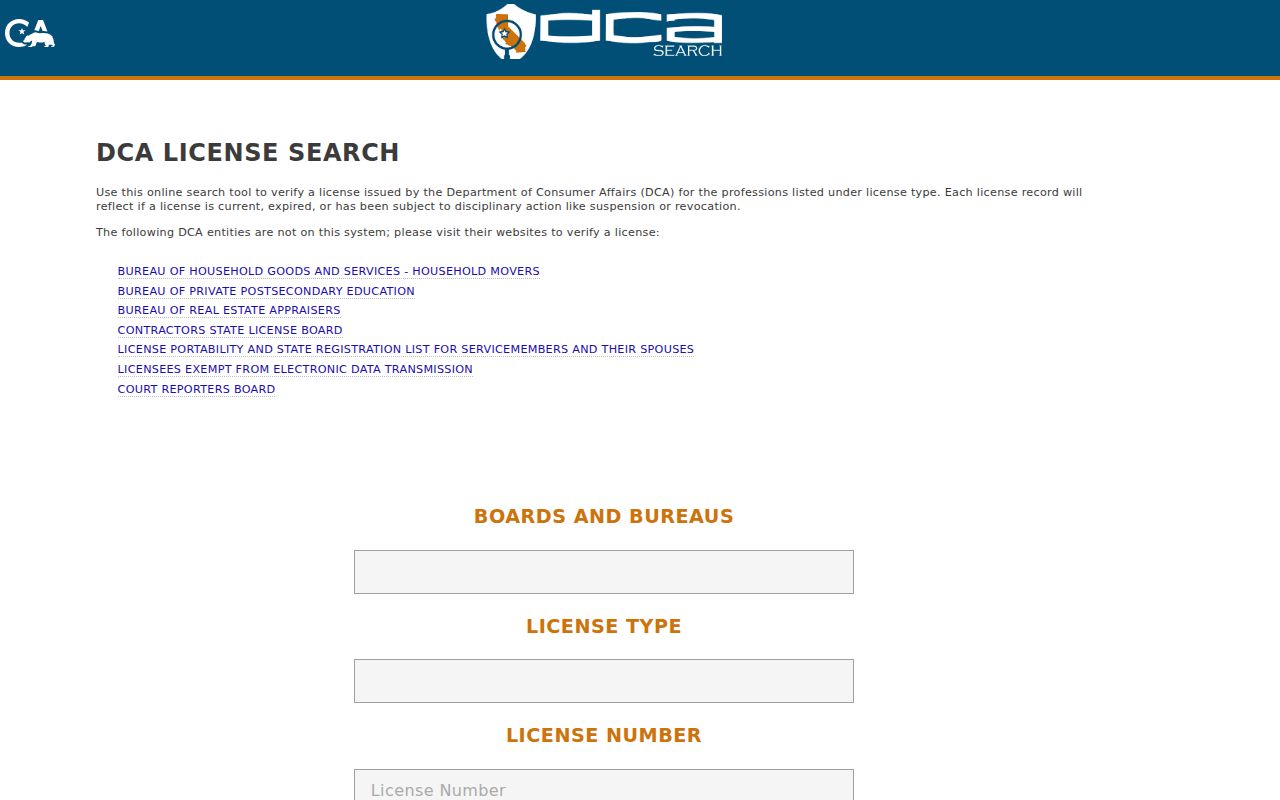
A license result can distinguish a name through board, occupation, number, or status fields, but it remains a professional record rather than a residence proof.
Placer County Court Records for Residents
The Superior Court online portal searches public Family, Probate, Civil, Criminal, and Traffic case information. It requires a filing date or date range, plus a case number or party/company name. Exact spelling and the original filing date reduce noise. Placer examples use dashed and zero-padded case numbers, so preserve the punctuation shown in a clerk record.
A court result can distinguish a same-name person by case number, party role, filing period, and status. It does not prove current residence. Public search also does not make every document remote. Adoption, juvenile, mental-health, search-warrant, Ramey-warrant, and sealed matters are unavailable through the account system. Eligible attorneys or active parties may need a case token for electronic files, while other inspection happens at a clerk counter.
For an older or off-site file, first obtain the case number through the portal or Gibson Courthouse terminal. A clerk name search that exceeds ten minutes is $15 per name. Off-site retrieval can take up to three weeks. The PL-CW001 form asks for dates, parties, case information, requested documents, copy type, and contact details. County Archive court files extend from 1851 to 1925, with probate through 1960.
The Placer Superior Court public portal is the current starting point. Federal cases have a separate federal access route and account rules.
The public court-search interface is the visible entry point for a dated case and party check.
The court reference illustrates why a case number and filing date are more useful than an unanchored name.
Placer County Vital Records
Vital records are a family-history and identity source with defined eligibility. The Placer County Clerk-Recorder reports births and deaths from 1873 to the present and marriages from 1852 to the present. Birth certificates are $34, death certificates $26, public marriage certificates $19, and confidential marriage certificates $24 under the county information reviewed. If no match is located, the search fee is retained and a certificate of no record is issued.
Birth and death copies come in two forms. An authorized certified copy is limited to eligible requesters under Health and Safety Code §103526 and requires a sworn statement. Anyone may request a certified informational copy, which is marked as not valid for establishing identity. Public marriage copies are broadly available from the county that issued the license. A confidential marriage copy is limited to a spouse or a court order under Family Code §511. A divorce decree belongs to Superior Court, not the Clerk-Recorder.
Modern certificates do not become broadly open after one simple number of years. Adoption records remain sealed under Health and Safety Code §102705, subject to statutory processes. Historical indexes in genealogy collections can reveal a name or date without making the underlying certificate unrestricted. The Placer County vital-records page supplies office locations and current ordering routes.
When Placer County Reaches the Archive
Placer County's Archive and Research Center is an offline portal with unusually clear record ranges. The county was created in 1851, and deed books and assessment evidence begin in that same year. The archive holds assessment rolls and maps from 1851 to 1961, not inclusive; deed books from 1851 to 1960; court files from 1851 to 1925; probate from 1851 to 1960; naturalizations from 1852 to about 1960; mining records from 1856 to 1947; and wills from 1874 to 1963.
Appointments are available Monday and Tuesday from 9 to noon and 1 to 3. Call 530-889-7789 or email the archive before traveling, especially for a mountain or Tahoe research trip. Assessment rolls, deeds, probate, photographs, maps, oral histories, diaries, and manuscripts can fill a gap left by a failed modern portal. The archive is a primary access channel, not a last sentence added after the web links.
| Term | Plain meaning in a residents directory search |
|---|---|
| Roll | A dated list or assessment record maintained for an official purpose. |
| Index | A finding aid with names and references, not always the underlying image. |
| Parcel | A mapped unit of land identified by an APN or assessment key. |
| Criss-cross directory | A reverse address section that can connect a house number to an occupant or business. |
County history gives the search a shape. A miner may appear in a claim, naturalization, court, or probate record without appearing in a city directory. A family may move between Auburn, Roseville, the foothills, and Tahoe communities while the record keeper changes with each place.
Placer County's Auburn-Rocklin Record Geography
Auburn is the county seat and the archival center, but the main Clerk-Recorder counter is at 3715 Atherton Road in Rocklin. The Auburn satellite counter is at 2954 Richardson Drive. That split is easy to miss when a search begins with the courthouse or a map pin. Recorder real-property records, archive appointments, and court counter services are not interchangeable trips.
The county's geography also changes the custodian. Placer includes Auburn, Colfax, Lincoln, Rocklin, Roseville, and Loomis, plus large unincorporated areas and North Lake Tahoe communities. A postal city does not prove city jurisdiction. Confirm the parcel in GIS before sending a permit request. Unincorporated building, planning, and engineering records route through county channels; an incorporated parcel may belong to the city's building division.
Note: The right place-name clue is not always the right records office; parcel jurisdiction controls many current property questions.
Placer County Probate and Heir Trails
Probate can reconnect a family line when a current address search has reached its limit. Start with a court case or archive finding aid. If the file is public, look for a decedent, petition, inventory, heir notice, or fiduciary. Then follow a deed recorded by an estate or trustee and compare the legal description with the parcel. An obituary may supply a relationship or a town, but it is a secondary lead and should be checked against a death index, probate record, or vital custodian.
The same sequence works for a historical household without turning an inference into a fact: will or probate, deed, assessment roll, directory or census, then a naturalization or mining record when the life story reaches the Gold Rush era. The County Archive's ranges make that chain possible. The state's adoption rules still apply. A family-history goal does not bypass a sealed record or a protected address.
Use the Placer County Library eLibrary for in-library Ancestry Library Edition, which includes census, vital indexes, passenger, naturalization, military, and city-directory collections. The library is a discovery layer; the named custodian remains the source for a certified record.
Placer County CPRA Requests
The California Public Records Act, now recodified at Government Code §§7920.000–7931.000, gives any person a route to an identifiable, disclosable record. Under §7922.535, an agency generally makes an initial determination within ten days and may extend that determination by no more than fourteen days in unusual circumstances with written notice. Ten days is not a promise that a complex file will be produced by then.
Send the request to the department that keeps the record. The county's public-records page provides department routes, inspection guidance, and a general CPRA channel. Community Development and several departments use Placer County NextRequest. The Sheriff's records unit has a separate Sheriff NextRequest portal. A request cannot force an agency to create a new list or disclose exempt material.
A focused request says what record, which address or APN, which names, what date range, and what delivery format is wanted. Ask for inspection when a copy is not needed. Direct duplication or statutory fees may apply, while inspection and noncontact photography generally are not copying charges. The custodian can explain redactions, exemptions, and the next step.
The Placer County public-records portal is one documented submission route for covered departments.
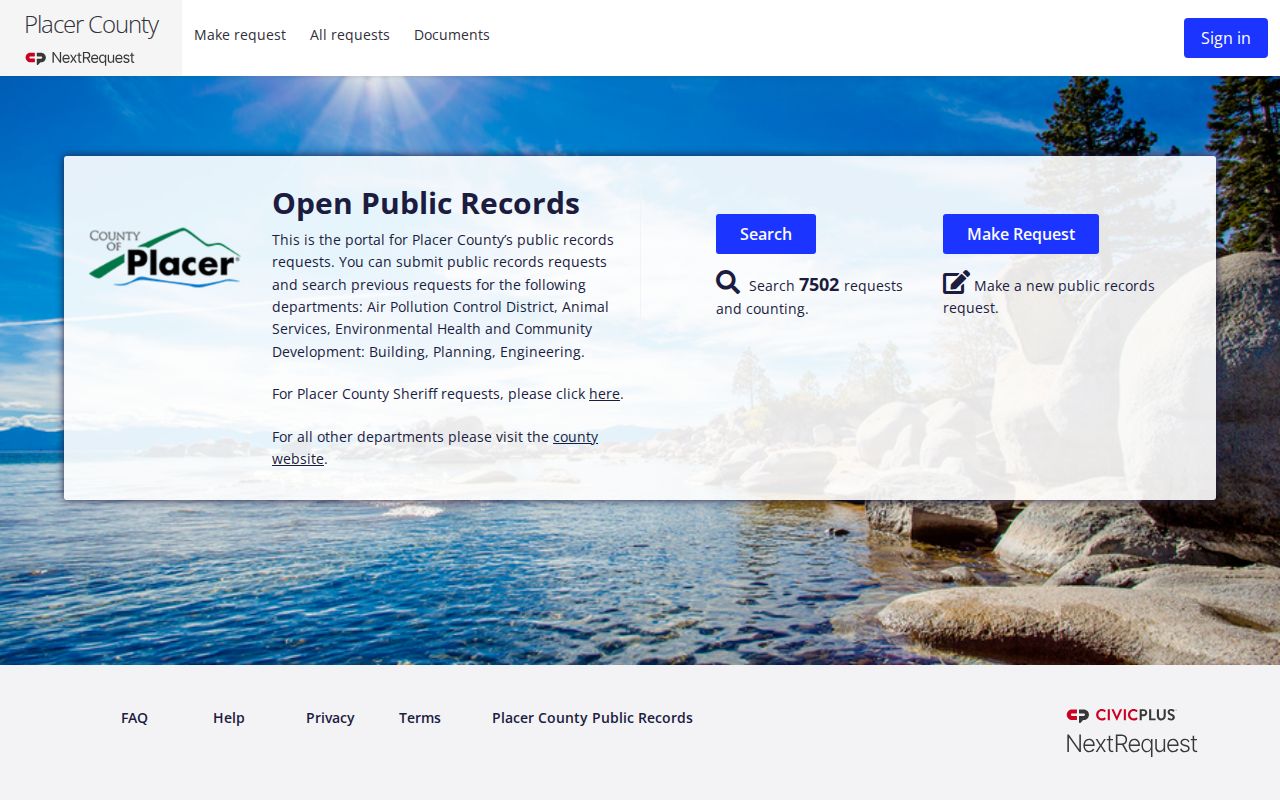
The request-portal reference shows the submission layer; the department that holds the record still controls inspection, exemptions, and production.
California's Public Records Act FAQ explains requester rights and exemptions, while the text of Government Code §7922.535 supplies the ten-day determination rule.
Older Placer County Directory Trails
Printed directories are best treated as dated household evidence, not a continuous countywide roll. The Placer County Library confirms in-library Ancestry Library Edition access, including U.S. city directories. The Archive's genealogy inventory points to a Personal Name Index to the 1856 City Directories of California, cemetery books, and society newsletters. Those are catalog leads. Ask staff to verify whether a title covers Auburn, Roseville, Lincoln, Rocklin, Colfax, Tahoe City, or another community before treating an entry as a Placer County match.
A county-hosted report documents Haines criss-cross editions from 1970, 1974, 1980, 1985, and 1989, followed by Cole Information Services editions from 1992, 1995, 1999, 2003, 2008, and 2013. The record proves address-keyed volumes existed and were consulted, but it does not prove a complete shelf run for every community. A directory year can show a name, spouse notation, occupation, address, and sometimes a reverse entry. Census schedules through 1950 help fill the ten-year gaps.
The full collections, entry conventions, Sanborn map links, and household-tracing method live in the Placer County city directory collections page. Sanborn sheets can stabilize an old street name or building footprint, while a directory or assessment roll supplies the person connection.
Lawful personal use. Public records support genealogy, civic research, family reconnection, property history, and safety awareness. California Penal Code §646.9 and related laws do not permit stalking, surveillance, threats, repeated unwanted contact, or harassment. Protected residents and confidential records must remain protected.
Placer County's residents directory works best as a chain of named sources. Keep the date, record role, custodian, and uncertainty beside each result. Verify with the office that holds the record before relying on it.