
The Placer County Resident Record Trail
One name rarely answers the whole question. The reliable path is a set of narrow checks, each tied to a custodian. Property sources are address and APN centered. The Recorder is a party and instrument index. Court results are case summaries. Vital records have copy eligibility. Business and professional records show an organizational connection. Historical probate, wills, directories, and census schedules add family context without turning an old entry into a current claim.
| Record | What it can confirm | Where | Access |
|---|---|---|---|
| Assessor and tax | Owner, displayed mailing destination, APN, situs | Placer tax and GIS tools | Address/APN route; name limits |
| Recorder index | Recorded party, instrument, date, reference | Clerk-Recorder CountyFusion | Index online; image office/copy route |
| Superior Court | Party, case role, filing date, status | Placer court portal | Public search; restricted files |
| Vital records | Birth, death, marriage event or family link | Clerk-Recorder or CDPH | Authorized or informational rules |
| Business or license | Entity role, credential, public business contact | SOS bizfile or DCA | Free state search; fields vary |
| Probate and wills | Decedent, heirs, fiduciary, estate property | Court or County Archive | Case and appointment rules |
Choose the first source based on what is already known. A parcel or old address gives better footing than a common name. A case number beats a surname. A license number beats an occupation. A directory year and town beat a vague historical search.
For a vital-record question, the local Placer County vital-records route and the statewide California Vital Records program are related custodians with different products. Current statewide prices are listed on the CDPH fee page.
Build a Two-Attribute Placer Match
Same-name control is the central skill in a resident lookup. Require two independent matching attributes before joining records. A middle initial, spouse, APN, legal description, case date, profession, business entity, or consistent address can separate two people with the same name. Treat a date of birth as sensitive and do not publish it merely because a source displays it.
Use a small research ledger. Write the name exactly as returned, the record role, the date, the custodian, the source URL, and the reason the entry may match. Mark a conclusion as possible, supported, or verified. A clerk can explain how to request a case or document, but staff generally cannot certify that two index entries describe the same life.
- Docket
- The court's case record and sequence of filings or events, identified by a case number.
- Index versus image
- An index helps locate a record; the image or file supplies the underlying document when access allows.
- Certified copy
- A custodian-issued copy with a certification, subject to eligibility and fee rules.
- Owner mailing address
- The destination for official correspondence, not proof of who occupies the situs.
Search Placer County Court by Party
The Placer Superior Court public portal searches Family, Probate, Civil, Criminal, and Traffic case information without a public-search account. The required pairing is a filing date or date range plus either a case number or party/company name. Use the original filing date when possible. Preserve dashes and leading zeroes in a case number such as S-CV-000XXXX. Exact spelling helps, but spelling variants should be tested after the first result set.
| Portal field | Type | Required | Practical note |
|---|---|---|---|
| Filing date or date range | Date pair | Yes | Start with the initial filing period. |
| Case number | Text | Unless party is used | Keep dashes and leading zeroes. |
| Party or company name | Text | Unless case number is used | Try exact spelling and controlled variants. |
| Case type | Category | Optional | Family, Probate, Civil, Criminal, or Traffic. |
| Search | Button | Yes | Public case search does not open every document. |
Expected public results may show case number, party names, category, filing date, status, and a register of actions where remote rules allow. The result can help separate a same-name person through role and date, but it cannot prove current residence.
Read the court's online portal guidance before relying on a result.
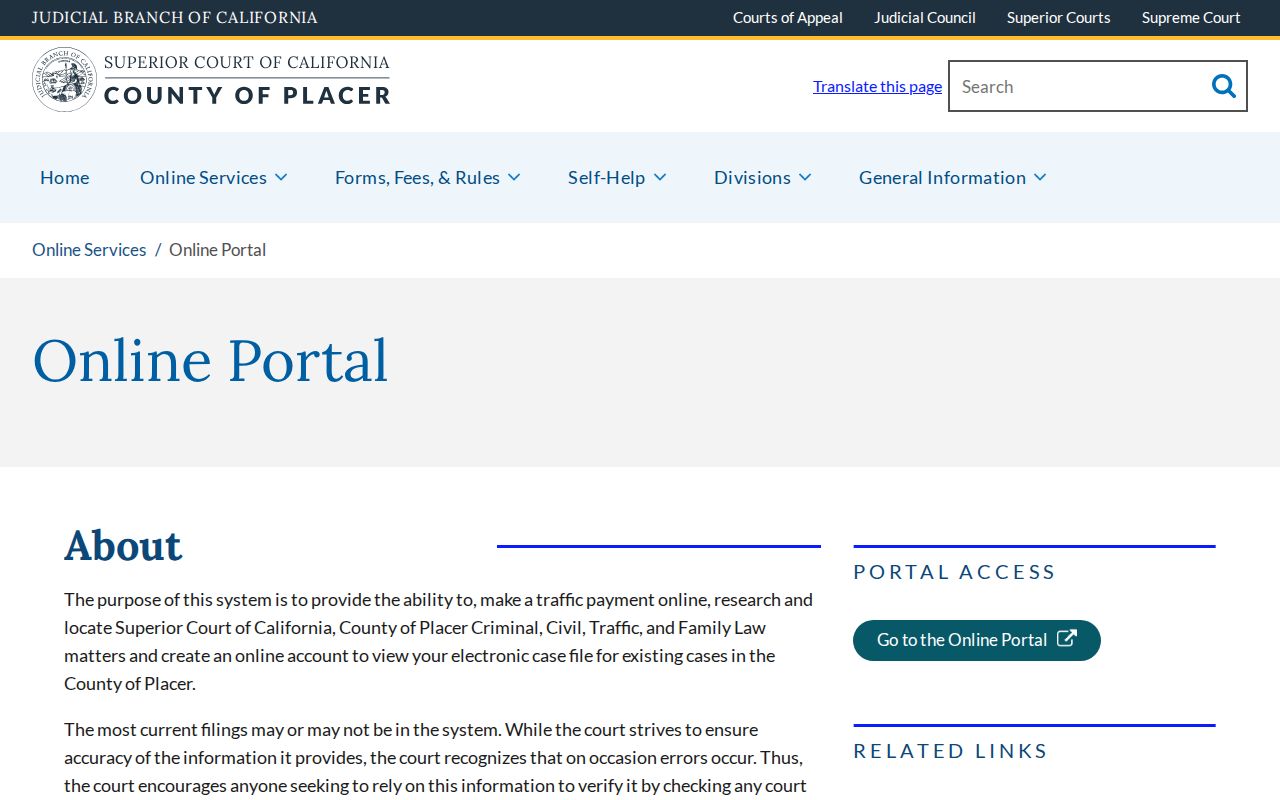
The court-search reference shows the public case-search route. Use the live portal for current fields and the clerk for a file, copy, or status question.
Federal civil, criminal, and bankruptcy matters use PACER, which requires a separate account and fee arrangement.
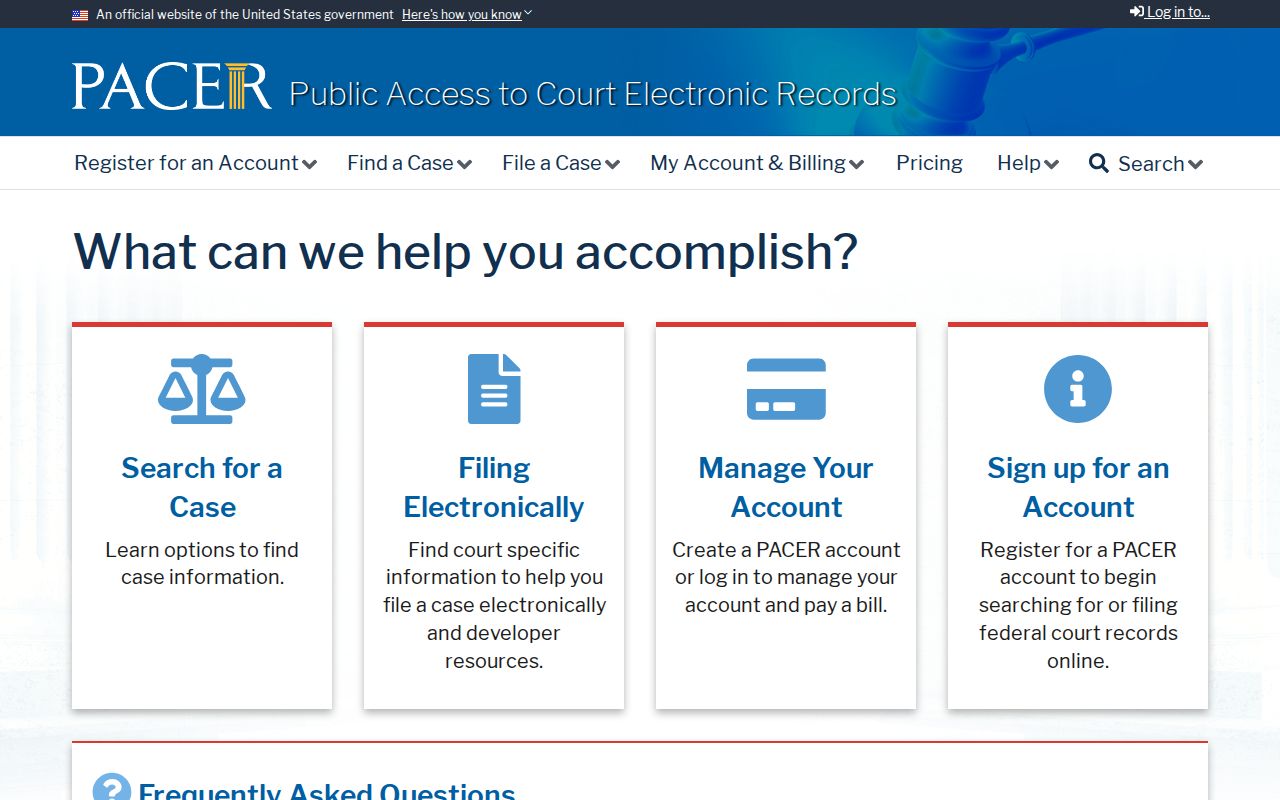
The federal-search reference marks the boundary between a Placer Superior Court case and an Eastern District of California case.
Placer Court Files That Stay Offline
Public case information is not the same as a public file. Adoption, juvenile, mental-health, search-warrant, Ramey-warrant, and sealed matters cannot be remotely accessed through the court account system. Some confidential family-law material may be redacted or counter-only. An attorney of record or active party may need an account and case token for eligible electronic files.
For a physical file, obtain a case number through the portal or Gibson Courthouse public terminal. A clerk name search taking more than ten minutes is $15 per name. Files off site may take up to three weeks to retrieve. The PL-CW001 Records and Copy Request asks for the case number, party names, criminal defendant birth date where applicable, documents wanted, filing period, copy type, and requester contact details.
Copies are listed at $0.50 per page. Certification adds the applicable document charge, and a search over ten minutes carries the $15 search charge. The PL-CW001 request form is the direct route when a portal result is not enough.
The court's case-record copy instructions explain counter, file, and copy access.
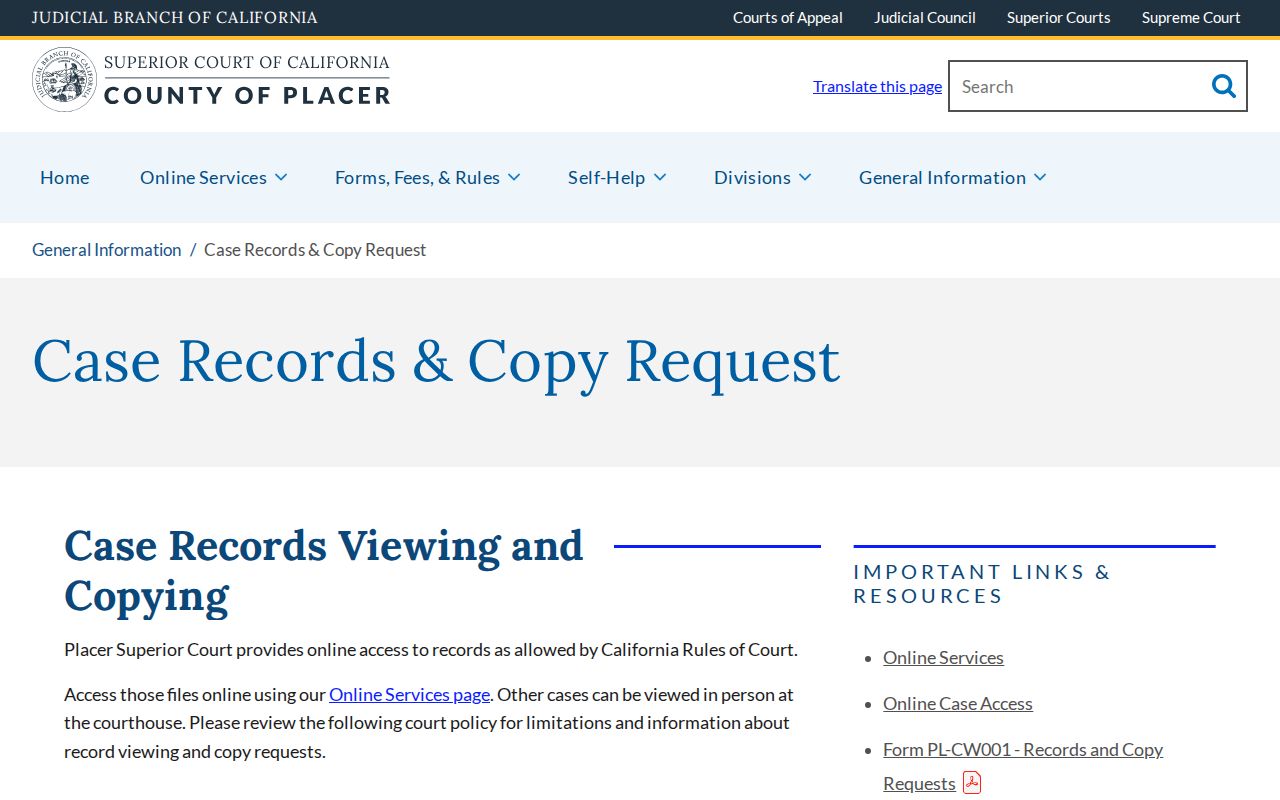
The copy-request reference shows the handoff from a public case result to a clerk-controlled file or copy.
Owner Mailing Is a Placer County Lead
An address can make a name search more precise. Use GIS to locate the parcel, then the tax route to capture the APN, situs, and displayed owner or mailing fields. The Recorder index can confirm a recorded transfer. Yet the owner mailing address may be a post office box, a trust contact, a manager, or another correspondence destination. It is a lead about the property record, not proof that a person lives there.
California limits Internet posting of assessor ownership information by name under Government Code §7924.205. That is why the Placer workflow is address or parcel first. The Placer property tax search and GIS open-data map are different steps. Keep the parcel number and legal description before joining the result to a Recorder party.
Note: Ownership can be confirmed by a recorded instrument while occupancy remains an open question.
Placer County Business and License Checks
A business or professional record can distinguish a person when a name is common. California Secretary of State bizfile searches an entity name or number and can return status, jurisdiction, formation or registration date, addresses, agent, and public filing history. A business address shows an organizational connection. It does not establish a home address.
The Department of Consumer Affairs search covers many boards and occupations, with modes for board or bureau, license type, name, number, and city or county. Board-specific pages remain the authority for discipline detail. Fictitious business name filings are county records and show a filing relationship, not necessarily who operates from the listed site today.
Open the official California business search for an entity trail.
The business-search reference illustrates the distinction between an entity result and a personal residence result. Keep entity role, address type, and filing date in separate notes.
For regulated work, use the California DCA license search and match the board, license type, and public address before treating a result as the intended person.
The license-search link supports a credential check, but it does not turn a professional listing into a current resident directory entry.
The State Controller's unclaimed-property search can return a reported name, address fragment, property type, and reporting business. It is a historical lead only; a claim needs proof.
Trace a Placer County Heir
Probate, wills, deeds, and obituaries can reconnect an heir trail while respecting sealed records. Start with a probate case or archive finding aid. Identify the decedent, petition, inventory, heir notice, or fiduciary when the file is public. Follow an estate or trustee deed to the Recorder index and compare the legal description with the parcel. Use an obituary as a secondary lead, then test the relationship against a death index, vital record, or probate page.
The County Archive holds probate from 1851 to 1960 and wills from 1874 to 1963. Historical court files reach from 1851 to 1925. These ranges can bridge a directory gap, especially where the 1890 census is missing. An adoption search must follow California's statutory process under Health and Safety Code §102705. Family purpose does not open sealed material.
The Placer County Archive is appointment-only. Call before requesting a range or manuscript. A researcher may also use the library's genealogy resources as finding aids.
Respect Self-Only Voter Status
California My Voter Status asks the person to authenticate with first name, last name, date of birth, and a driver license or ID number or last four Social Security digits. It can show registration location and status, party preference, ballot status, polling place, and election details. It is not a stranger's name search.
A qualified voter-file request is a different access channel. Elections Code §2194 and 2 CCR §§19001–19013 require an approved purpose and application. The statewide file costs $100; up to ten identified records cost $30 each, capped at $100. Placer's 2025 form lists countywide, precinct, walking-list, history, label, and delivery choices. The application includes a statement against commercial use and harassment.
Confidential voters, unique identifiers, signatures, driver license numbers, and last four Social Security digits are excluded from the released file. A resident lookup should never attempt to defeat a confidentiality program.
Verify a Placer County Resident's Records
Verification means that the sources agree on the same person for the same purpose. It does not mean that every available record has been collected. Anchor the name to a parcel, case, business, license, spouse, or dated historical entry. Then move across custodians, keeping the record role clear.
- Normalize spelling, initials, suffixes, and known town or ZIP details without erasing the source's original form.
- Use a court party, business, license, or known parcel to obtain a second distinguishing attribute.
- Check the Recorder, tax, vital, or archive record that answers the actual question.
- Compare date, address, spouse, case role, entity, or legal description before joining entries.
- Order a certified copy only from the custodian when proof requires a certified record.
For a historical address or past household, move to the Placer County city directory collections route. For everyone along a known street, use the address workflow rather than forcing a person search to answer a block question.
Correct the Placer County Source
Corrections go to the custodian, not to a directory summary. The Assessor handles roll questions. The Recorder handles its index and document procedures. The court clerk handles case records. Elections handles registration. A license board handles credential data. The County Archive can explain its finding aid or appointment holdings. A CPRA request can seek an identifiable disclosable record but cannot compel a new list.
California CPRA requests generally receive an initial determination within ten days under Government Code §7922.535, with a possible written fourteen-day unusual-circumstances extension. Send the request to the department that holds the record, describe the names, date, address or APN, and ask for inspection or copies. The county's public-records request page lists routes and inspection guidance.
Legal Limits on a Placer County Resident Lookup
Public access is not permission for harm. California Penal Code §646.9 addresses stalking, and other harassment, threat, restraining-order, and privacy laws can apply. Voter-file misuse and false applications can trigger Elections Code §§18109 and 2194. The Driver's Privacy Protection Act separately restricts DMV personal data.
Lawful personal use. Use a Placer County resident lookup for genealogy, family reconnection through lawful channels, estate research, civic understanding, or a record question that belongs with an official custodian. Do not use results to stalk, harass, intimidate, threaten, or repeatedly contact anyone. Safe at Home and confidential-voter protections must not be bypassed.
Safe at Home gives eligible participants a substitute mailing address and confidential handling under program rules. The California Secretary of State Safe at Home program explains the protection. Verify important facts with the office that holds the source record before relying on a result.