
A Placer County Directory Shelf
Start with the Placer County Archive and Research Center. Its record groups reach back to the county's first decades. That depth lets you test any directory entry against land, court, probate, or naturalization evidence. For discovery, the library layer is easier. Ancestry Library Edition runs on any library computer. A published genealogy inventory adds more leads. These include a Personal Name Index to the 1856 City Directories of California, cemetery books, and society newsletters. Those catalog clues still need a staff check, since geographic coverage is not guaranteed.
| Collection | Years or span | Where held | Access and value |
|---|---|---|---|
| Assessment rolls and maps | 1851–1961, not inclusive | Placer County Archive | Appointment; owners, land, value |
| Deed books | 1851–1960 | Placer County Archive | Appointment; title continuity |
| Probate | 1851–1960 | Placer County Archive | Appointment; decedent, heirs, property |
| Naturalizations | 1852–about 1960 | Placer County Archive | Appointment; declarations and petitions |
| City directories | Discontinuous local and regional titles | Library, Archive, Ancestry Library | Verify title, place, and year |
| Sanborn maps | Place-specific sheets | Library of Congress | Free digital sheets when available |
Placer County has no single printed run that covers every town and every year. No official source publishes a complete Polk, Husted, or telephone directory set for the county. The Archive genealogy-book inventory is a good catalog lead. Staff still need to confirm each title and its coverage. Before you travel, ask the archive, the Auburn Library, or the Roseville Public Library. Ask whether a volume covers your community.
Placer County Archive Numbers and Stories
The archive's holdings begin the same year Placer County itself did. Lawmakers created the county in 1851, at the height of the Gold Rush. Deed books, assessment rolls, and maps all start that year. Court files run from 1851 to 1925. Probate reaches from 1851 to 1960, with wills spanning 1874 to 1963. Mining records cover 1856 through 1947. Naturalizations run from 1852 to roughly 1960. Anyone tracing past residents of Placer County should remember that these files name people who never made it into a printed city directory or street directory.
Visiting takes planning. The County Archive takes researchers by appointment only, on Monday and Tuesday, 9 to noon and 1 to 3. Call 530-889-7789 or email ahead. That call is worth making for Tahoe and mountain work, since a shelf, manuscript, or film may not be available on a walk-in basis. The archive also keeps photographs, maps, oral histories, diaries, and local manuscripts, material that adds names and context around any formal record a resident lookup turns up.
Note: An archive catalog entry proves that a finding aid exists; staff must confirm the item, geographic coverage, and access condition.
Ancestry Library Edition in Placer County
The Placer County Library offers Ancestry Library Edition through its eLibrary service. Access works inside the library itself. The database gathers U.S. city directories alongside census schedules, birth, marriage, and death notices. It also holds passenger lists, naturalization files, and military records. A Placer County library card unlocks other electronic resources. The county makes no promise of remote Ancestry access. Bring your search to a library computer, or ask staff which licensed route applies that day.
Treat any database hit as a lead rather than a conclusion. Record the title, page, year, place, and the exact search terms you used. Then confirm the person in the printed volume. A custodian record such as property rolls or voter rolls also works. A result labeled "Placer County" may actually come from a regional Sacramento title. It might be a neighboring town. It might be someone with a similar name. The county stretches across a long stretch of the Sierra foothills. Town-level checking matters in any residents directory search.
The Placer County eLibrary carries the current access instructions for library visitors. It can point you toward a city directory search. The displayed record still deserves its edition and page context. Keep those details with every note.
Read a Placer County Directory Entry
A Placer County directory entry packs a household into one dense line. Read the whole thing. The line may carry a spouse in parentheses or a widow notation. It often lists an occupation, an employer, a home address, and a business address too. Later volumes flag a householder, boarder, or roomer. A symbol means only what that year's key assigns to it. Keep the abbreviation page close at hand.
| Entry detail | What to record |
|---|---|
| Name | Surname, given name or initial, spelling, and any spouse or widow note. |
| Occupation | Published work or employer, useful as a distinguishing clue without proving residence. |
| Home address | House number and street as printed, including abbreviations. |
| Business address | A second location that must not be mistaken for a home. |
| Household mark | Owner, householder, boarder, or roomer symbol if the volume defines one. |
| Cross-reference | Changed surname, spouse, or nearby business pointer. |
- Criss-cross section
- A street-order half of a directory that can turn a number into a dated occupant or business clue.
- Householder index
- A section organized around the person treated as the head or primary contact for an address.
- Abbreviation key
- The publisher's definitions for marks and shortened words, usually near the front.
- Index versus image
- A search result or catalog line helps locate an entry; the page image supplies the exact printed context.
Photograph the title page, publisher page, coverage statement, abbreviation key, and your entry in one pass when repository rules permit. Never expand an abbreviation using a modern guess.
Check Reverse Sections Before Searching
A reverse section does not appear in every Placer County city directory. Check the table of contents first. When one exists, start from an exact address and copy the next few numbered entries. Then flip to the alphabetical section and compare the spouse, occupation, and any alternate address. The entry carries the most weight this way. The edition, page, town, and street number should all line up. Local evidence confirms several late runs without proving a complete shelf. A county-hosted environmental report appendix lists Haines editions for 1970, 1974, 1980, 1985, and 1989. Cole Information Services editions follow for 1992, 1995, 1999, 2003, 2008, and 2013. Another report logs directory checks for 1980, 1985, 1990, 1996, 2001, 2005, and 2010 near the Government Center. A 2014 check appears there too. Treat these as verified clues. They do not guarantee that every community shows up in every volume. A reverse directory shines when you need a past address. For current parcel work, the Placer County street directory workflow fits better. The old book gives you the historical occupant snapshot.
Pair Placer County Directories with Census Years
Federal census schedules through 1950 are public under the 72-year release rule. The 1960 count opens in 2032. That gap is where a Placer County residents directory earns its keep. A directory sitting between two census years can reveal a move, a new spouse, a changed occupation, or steady address continuity. The census supplies what the directory leaves out: age, birthplace, relationships, and the rest of the household.
Work from the same spelling and place in both sources. Copy every address exactly as printed. When a person drops from view, try widow notations. Try an occupation, a spouse, an adjacent street number, or the next deed. The 1890 population schedule was mostly destroyed nationwide. Placer assessment rolls, deeds, probate files, mining records, and directories carry extra weight for that decade. The National Archives census research page lays out the federal release framework and access routes. Pair it with library databases. Don't assume a missing 1890 entry means the household was never there.
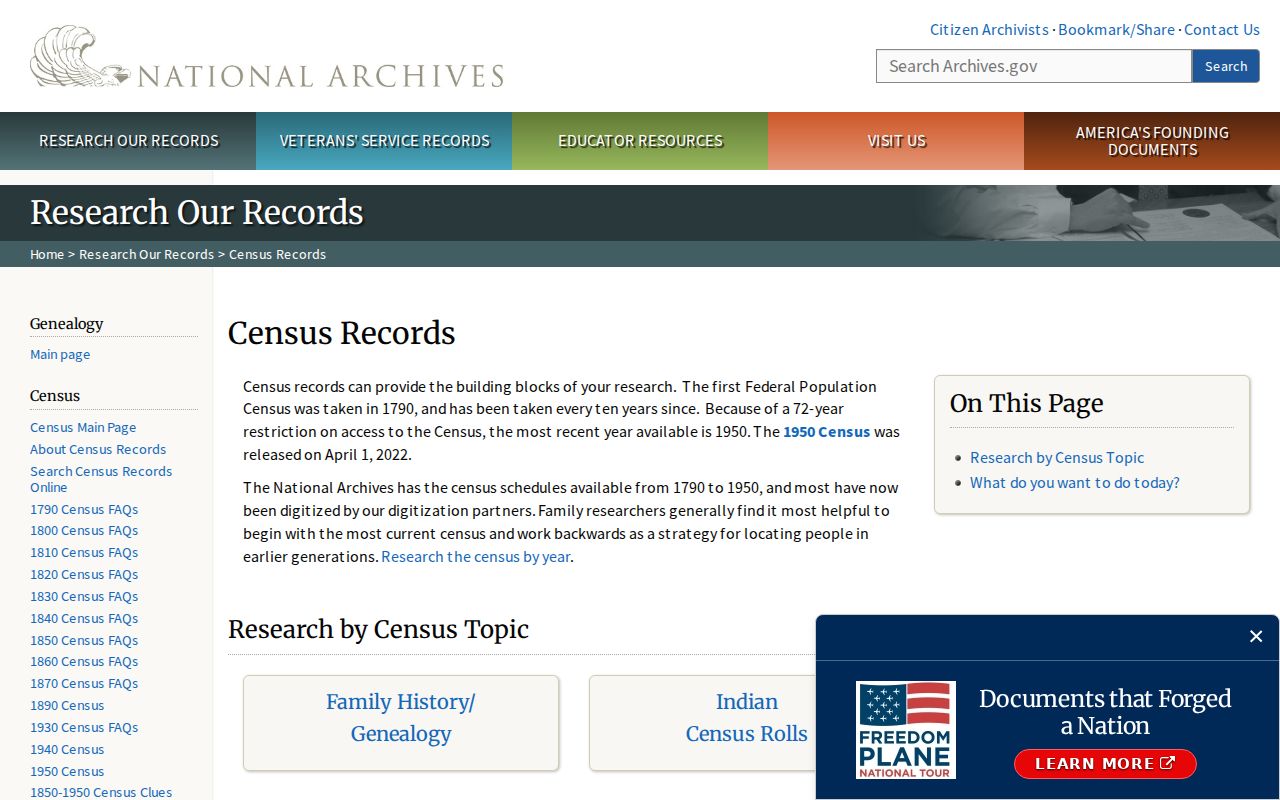
The method holds across every decade. A Placer County residents directory works best as one link in a paired sequence of directory, census, deed, and archive evidence, not as an isolated search hit.
Fill Placer County's 1890 Gap
Most 1890 population schedules were lost nationally. That loss leaves a hole in many Placer County family trails. The county offers solid substitutes. Assessment rolls and maps show ownership and value. Deed books show a transfer. Probate files and wills reveal an heir or fiduciary. Mining records place a person in a claim district or dispute. Naturalization papers add an origin and a date.
None of these records recreates a census household. Label the role each one actually supports. A mining claim ties a person to a claim, not to a present-day street. A deed ties a party to land, not to everyone who lived on it. And a directory is an address snapshot, never proof of continuous occupancy.
Sanborn Maps and Placer County Addresses
Sanborn fire maps are building-footprint sources, not people directories. The Library of Congress collection shows old street names, house numbers, construction materials, building use, and later additions. Search Auburn, Roseville, Lincoln, Rocklin, Colfax, Dutch Flat, Newcastle, Loomis, and Penryn. Search by place and sheet.
Placer County editions include Auburn 1891, 1894, 1899, 1907, and 1912. Roseville has sheets from 1884, 1890, 1899, 1907, 1909, 1915, 1925, and 1944. Lincoln covers 1884, 1890, 1893, 1899, and 1910. Rocklin offers 1890, 1893, 1898, 1907, and 1941. Additional sheets exist for Colfax, Dutch Flat, Newcastle, Loomis, and Penryn. Coverage can stop at a historic town limit. A missing sheet never proves a building was absent.
Use the Library of Congress Sanborn collection, including the 1891 Auburn atlas record, for the map itself. Then bring in a directory, assessment roll, or deed to attach a person or owner. The map stabilizes the address. It does not supply the household on its own.
Town-by-Town Placer County Directory Work
Placer County city directories track population centers, not county lines. Search Auburn, Roseville, Lincoln, Rocklin, Colfax, and Loomis separately. Add Tahoe City and regional Sacramento titles when the family or address points east or west. A "Sacramento and vicinity" volume may include South Placer suburbs, but its geographic table must confirm the coverage first.
This town-by-town habit also explains why a single county keyword can miss a result. Someone in Granite Bay, Tahoe City, or an unincorporated foothill community may appear under a postal or regional place name instead. The Roseville Local History Center is one municipal collection worth checking when an address points to that city. Confirm the title's geographic scope before comparing years. When printed directories thin out, local newspapers, cemetery books, school annuals, church registers, and fraternal or veterans rosters can supply fresh leads.
Note: Search the community name used by the publication, then compare it with the parcel or archive record that anchors the place.
Trace Families Through Placer County Directories
A household trail gets clearer when facts are copied without modernizing them. Fix the first known spelling and year, then follow the person through every available directory. Record the address, spouse, occupation, employer, and any symbol. Use the reverse section when one exists. Pair each era with a census, deed, assessment roll, obituary, cemetery book, or probate file.
- Start with a known person, place, and date from a deed, vital index, census, or family paper.
- Search the exact directory title and place, then record the page and entry as printed.
- Follow the name forward and backward through available editions, testing spelling variants without merging same-name entries.
- Use the address section, Sanborn sheet, or legal description to bridge a changed number or street name.
- Close the trail with an obituary, cemetery record, probate file, or archive source, and keep every citation.
A vanished name can mean many things. It may signal a move, a death, an unlisted household, or a gap in the run, so search spouse and widow forms, check the next deed, and consult the County Archive. A precise gap beats an invented continuous story.