
Start with the Placer County Residents Question
Every good residents directory search starts with a question, not a name. What do you actually need to know? The current owner of a parcel is one record subject. A registered voter is a different subject. So is a court party, a licensee, or a name in an old street directory. Placer County runs from the Sacramento edge through Gold Country foothills up to North Lake Tahoe. Custody of records shifts with the question and the jurisdiction. A parcel can sit inside an incorporated city. Its mailing address may still carry an unincorporated place name. Start with an address when you have one.
Addresses outlast common names. The county tax search and GIS maps can pin down a situs and an APN. The Recorder index then ties that parcel to grantors, grantees, document numbers, and recording dates. Court files, vital records, business registrations, licenses, and archive collections each add their own kind of identity evidence. None of them lists every person at an address. A directory entry is a dated snapshot, and a deed records a single transaction. Voter records carry their own purpose and access rules.
- Write down the exact address, postal city, ZIP, and any APN or document number already known.
- Use the county GIS gateway or parcel map to confirm the parcel and whether city or county jurisdiction holds related records.
- Open the tax account with its supported parcel or assessment identifier, then note the situs and mailing fields separately.
- Use the Recorder's grantor-grantee index for a recorded owner trail, and order or inspect the image only through the documented office route.
- Choose the library, court, vital-record, archive, or CPRA channel that matches the remaining question.
Note: A name is a lead; an APN, case number, dated entry, or legal description is the stronger control.
Where Placer County Keeps Resident Records
No single Placer County office keeps a master list of residents. The Clerk-Recorder holds recorded instruments plus local vital records. The Assessor and the Treasurer-Tax Collector each publish parcel data. Each also publishes tax data through its own tools. Elections runs the registration system. California turns the public status screen into a self-lookup rather than a reverse household directory. Superior Court keeps case records. For history, the library and the County Archive hold the older shelf.
Placer County Clerk-Recorder
Real Property Records
3715 Atherton Road, Rocklin, CA 95765
530-886-5600
Real-property index and counter records
Placer Assessor / Tax Collector
Parcel and tax information
Address/APN search route
County web access
Parcel and tax information
Placer County Elections
Registration and voter files
Auburn, California
530-886-5650
California self-status route
Placer County Archive
Historic county records
Appointment required
530-889-7789
Appointment-based archive route
Go to whichever office owns the record you need. The county's CPRA page directs requests to the responsible department by person, phone, or writing, and the Clerk of the Board takes multi-department requests at 175 Fulweiler Avenue in Auburn. A focused request names the record, the date range, the address or APN, and the format you want.
Placer County Parcel-to-Resident Search
Address first is the most productive route. The county's GIS gateway finds a parcel by address or by a click on the map. The Assessment Inquiry wants a 12-digit Fee Parcel Number, a 12-digit Assessment Number, or, past its agreement screen, an aircraft tail number. That difference matters. Just because GIS accepts a street string does not mean the tax page does too. Carry the right identifier from one tool into the next.
Write down four values as you go. Note the situs address and the owner mailing address. Also note the APN or assessment number and the legal description. The situs marks the taxed location, while the mailing address is where tax correspondence goes. A legal description fixes the land itself through a subdivision lot or a metes-and-bounds recital. When the mailing and situs addresses match, you may have an occupancy clue. That still cannot tell you everyone at the parcel.
| Property search field | How Placer County uses it |
|---|---|
| Fee Parcel Number | 12-digit identifier accepted by Assessment Inquiry. |
| Assessment Number | 12-digit alternative account key. |
| Property address | Use the GIS gateway for the address-to-parcel step. |
| Owner name | Do not promise a general Internet name search because Government Code §7924.205 limits online assessor posting by assessee name. |
| Tax year | Current or prior choices depend on the live tax interface; roll data reflects the January 1 lien date. |
With the parcel pinned down, open the Recorder index. A new deed can show up there before the Assessor's roll catches up, and that gap is a practical clue whenever a tax page seems to lag behind a recorded transfer. It also explains why a residents directory built from one source can misdate an ownership change. The Placer property tax search is the starting point for the parcel-account leg of this trail.
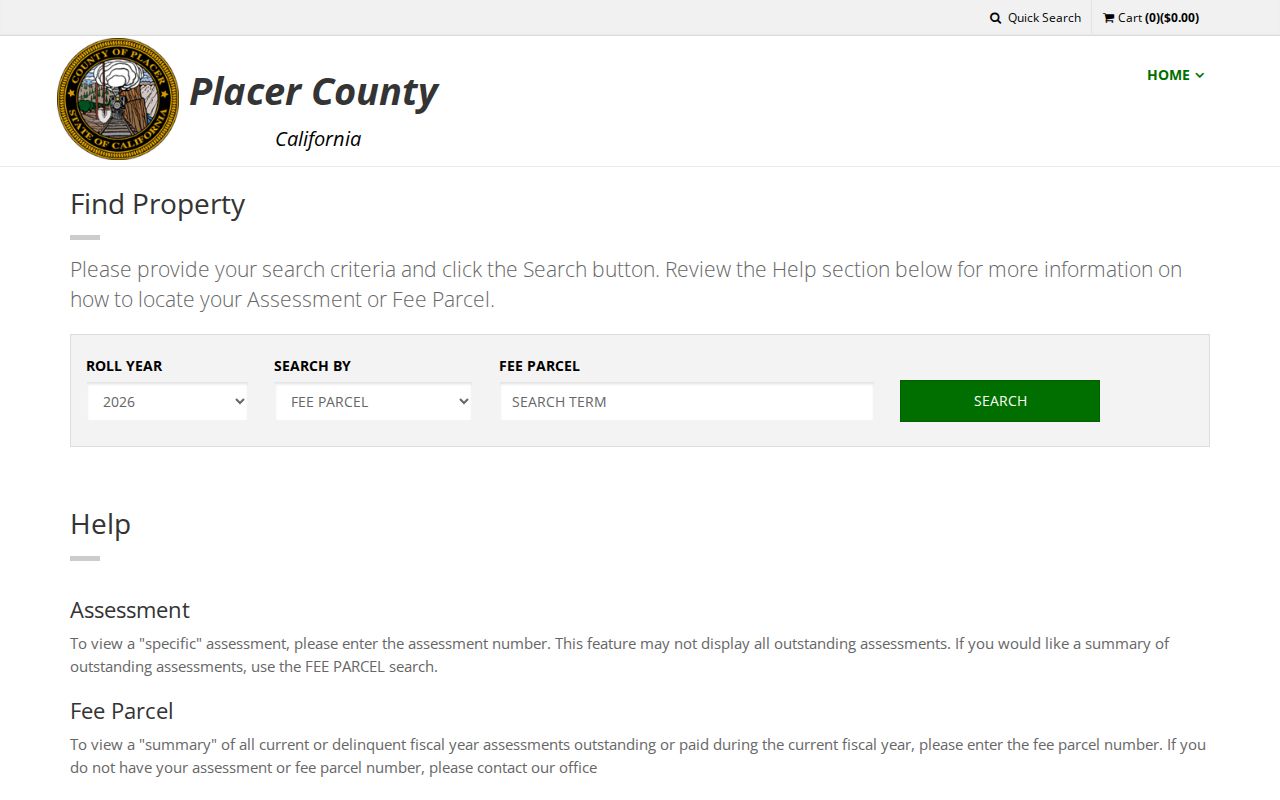
The property search reference shows why an address or parcel key must come first, before any person name is attached to the record.
Placer County Deeds and Owner Trails
Placer County's Recorder public index is a classic grantor-grantee index. It returns party names, instrument type, recording date, document number, and reference details. Inspection is free online through the linked CountyFusion application. Scanned instrument images are not posted for remote viewing, though. You can view the image at the Recorder counter. You can also request a copy by document reference through the office's copy channels.
For a backward trail, begin with the most recent acquisition instrument. The grantee is the new recorded owner. The grantor is the seller or transferor. Search that earlier grantor as a prior grantee, then keep stepping back in time. Check the APN and legal description at every turn. Subdivision changes, lot-line adjustments, and account splits can send a name-only chain hopping to the wrong parcel, because of that risk.
Noncertified official copies are listed at $2 for the first page. Each additional page is $1 on the real-property page. The Recorder's fee page also covers certification and delivery charges. Confirm the total with the counter before sending payment. A mail request should include the document type, the parties, and the recording reference. Add a daytime phone, a mailing address, payment, and preferably a self-addressed legal-size envelope.
Note: A courtesy ownership-change letter is a notice, not proof of fraud; compare the document number, APN, and legal description before acting.
For a closer walk through the parcel, deed, permit, and street sequence, see the Placer County street directory page, which keeps the address chain separate from historical and one-person searches.
Placer County Voter Lookup Rules
California My Voter Status works only for the voter's own record. The form demands first name, last name, full date of birth, and a driver license, ID number, or the last four digits of a Social Security number. What comes back is personal. Registration location and status, party preference, ballot status, polling place, and election details all appear once the identity check passes. Strangers cannot browse it. It is an authentication flow, not a street directory for looking up other people.
A fuller voter file is a different animal. Elections Code §2194 and 2 CCR §§19001–19013 govern permitted uses and what data may be released. An application, a qualified purpose, approval, and payment all come first. Placer's 2025 application covers walking lists, precinct lists, countywide electronic files, histories, labels, delivery choices, and an intended-use certification. A walking list can sort by street and house number. Even so, it stays a restricted file. It is not a public browse tool for anyone seeking past residents or neighbors.
| Route | What it can show | Who can use it | Boundary |
|---|---|---|---|
| My Voter Status | Authenticated registration and election details | The voter completing the match | Self-only identity check |
| State voter-file request | Approved voter data and optional history | Qualified requester | Application, purpose, fee, exclusions |
| Placer Elections list request | County, precinct, or walking-list formats | Approved requester | Agreement against misuse or harassment |
Confidential voters and protected addresses must stay out of an ordinary lookup. The system can confirm an authenticated person's own record. It can also hand a lawful extract to an approved requester. It cannot serve as an unrestricted residents directory. The California My Voter Status form shows the self-authentication route and its required identity fields.
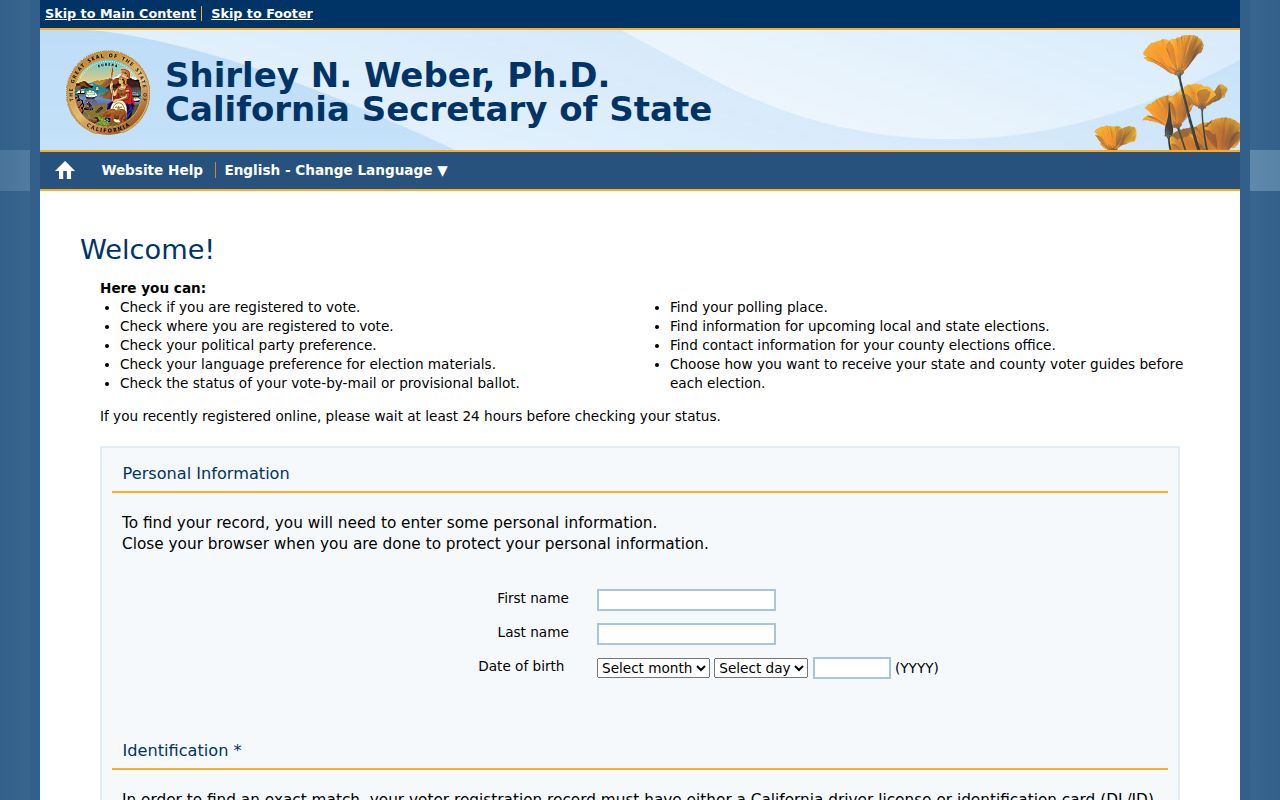
The voter reference reinforces the split. A private status check and a qualified voter-file request are two different things.
Today's Placer County Directory Sources
Each current directory-like source answers a different question. Tax and Recorder systems shine for property ownership and recorded parties. The court portal is a case index, not a residence register. A license or business filing places a person in a professional or organizational record. Voter data sits behind authentication and qualified-use rules. Trust follows the custodian. A result earns confidence when it is matched to the right records office. The date matters just as much.
| Source | Record subject | Keeper | Access route |
|---|---|---|---|
| Property tax and GIS | Parcel, situs, tax account, displayed ownership fields | Assessor / Treasurer-Tax Collector | Address, map, or parcel route |
| Recorder index | Grantors, grantees, instruments, dates | Clerk-Recorder | Free index; image counter or copy request |
| My Voter Status | Authenticated voter's status and polling information | California Secretary of State | Self-authentication |
| Superior Court portal | Parties, cases, filing dates, status | Placer Superior Court | Public case search; restricted files |
| Business and license indexes | Entity roles or professional credentials | California SOS or DCA | Free state searches; fields vary |
No single Placer County residents directory combines these records. A good lookup keeps each role visible. Owner, grantee, case party, licensee, registrant, or historical occupant. That language matters. It keeps a record from quietly becoming a claim about current residence. The California DCA license search is one example of a role-specific state lookup.
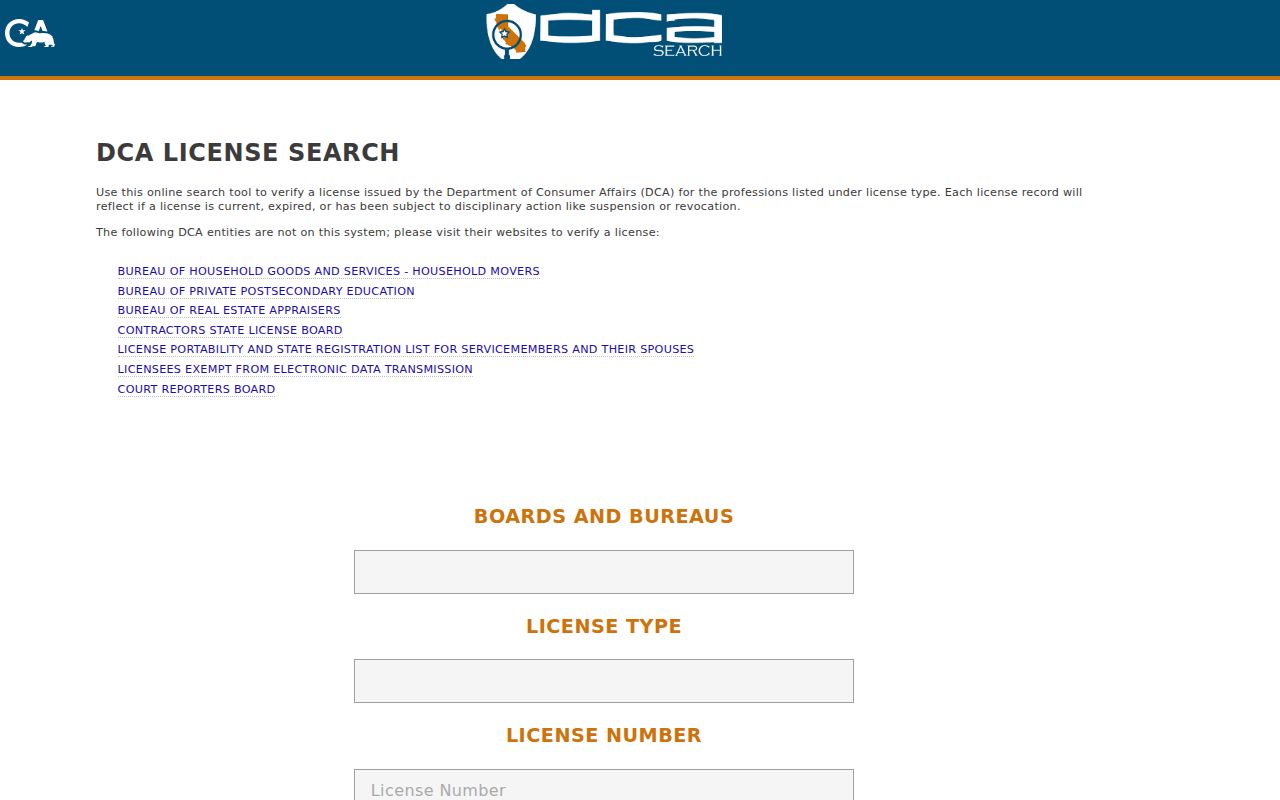
A license result can separate names through board, occupation, number, or status fields. Still, it is a professional record, not proof of where someone lives.
Placer County Court Records for Residents
The Superior Court online portal searches public Family, Probate, Civil, Criminal, and Traffic case information. It needs a filing date or date range. It also needs a case number or party and company name. Exact spelling helps. So does the original filing date. Placer case numbers run dashed and zero-padded. So preserve the punctuation shown in a clerk record.
A court result can distinguish a same-name person. Case number, party role, filing period, and status all help. It does not prove current residence. Nor does public search put every document online. Adoption, juvenile, mental-health, search-warrant, Ramey-warrant, and sealed matters stay unavailable through the account system. Eligible attorneys or active parties may need a case token for electronic files. Other inspection happens at a clerk counter.
Older or off-site files take extra steps. Get the case number first through the portal or a Gibson Courthouse terminal. A clerk name search that exceeds ten minutes costs $15 per name. Off-site retrieval can take up to three weeks. The PL-CW001 form asks for dates, parties, and case information. It also asks for requested documents, copy type, and contact details. County Archive court files run from 1851 to 1925, with probate through 1960.
The Placer Superior Court public portal is the current starting point. Federal cases follow a separate federal access route and account rules. The public court-search interface remains the visible entry point. It serves a dated case and party check.
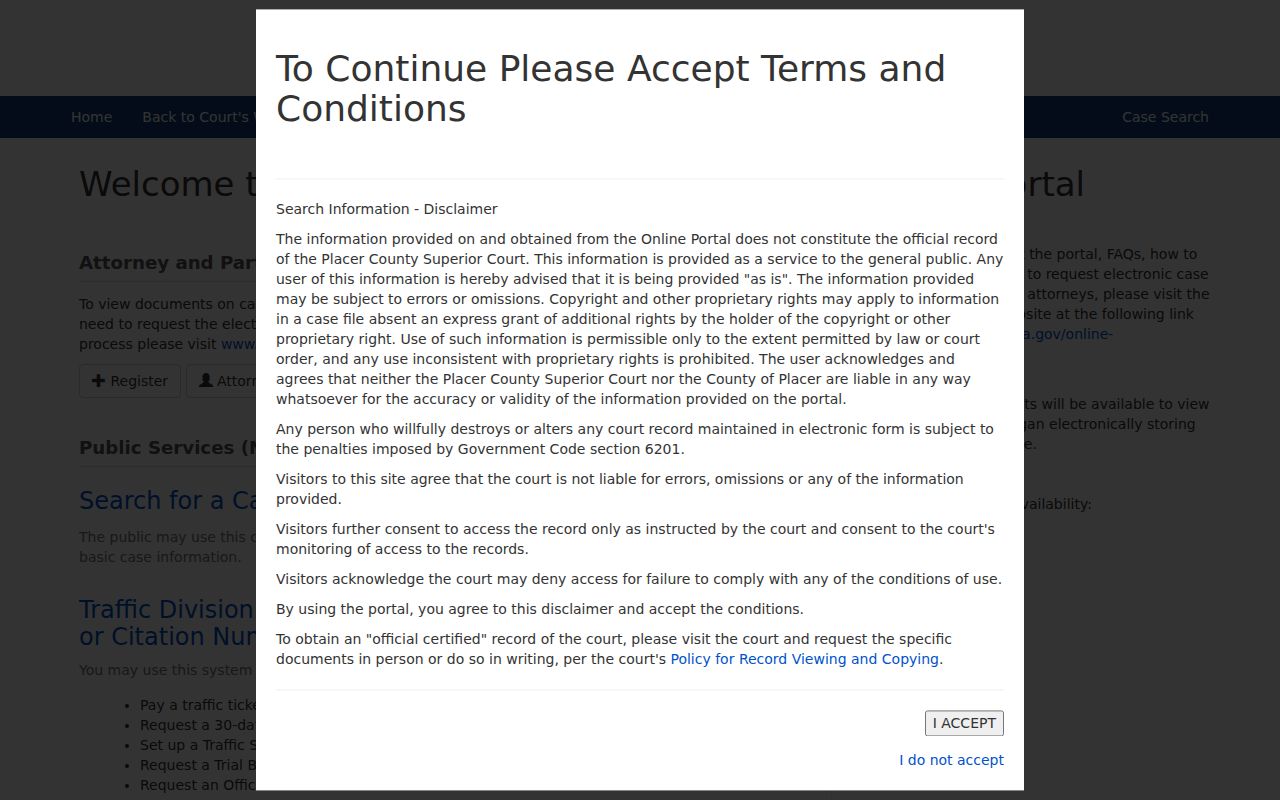
The court reference shows why an anchored search beats a bare name. A case number and filing date do the real work.
Placer County Vital Records
Vital records are a family-history and identity source with defined eligibility. The Placer County Clerk-Recorder holds births and deaths from 1873 to the present and marriages from 1852 to the present. Fees run $34 for a birth certificate, $26 for a death certificate, $19 for a public marriage certificate, and $24 for a confidential marriage certificate. If no match is located, the search fee is retained and a certificate of no record is issued.
Birth and death copies come in two forms. An authorized certified copy is limited to eligible requesters under Health and Safety Code §103526 and requires a sworn statement. Anyone may request a certified informational copy, marked as not valid for establishing identity. Public marriage copies are broadly available from the county that issued the license. A confidential marriage copy goes only to a spouse or by court order under Family Code §511. Divorce decrees belong to Superior Court, not the Clerk-Recorder.
Modern certificates do not become broadly open after one simple number of years. Adoption records stay sealed under Health and Safety Code §102705, subject to statutory processes. A historical index in a genealogy collection can reveal a name or date. That does not make the certificate itself unrestricted. The Placer County vital-records page supplies office locations and current ordering routes.
When Placer County Reaches the Archive
Placer County formed in 1851, and the Archive and Research Center still keeps records reaching back to that founding year. Deed books run from 1851 to 1960. Assessment rolls and maps cover 1851 to 1961, not inclusive. Court files span 1851 to 1925. Probate reaches from 1851 to 1960. Naturalizations stretch from 1852 to roughly 1960, mining records from 1856 to 1947, and wills from 1874 to 1963.
Everything sits offline at the archive. Appointments fall on Monday and Tuesday, 9 to noon and 1 to 3, so call 530-889-7789 or email before traveling. That matters before any Tahoe or mountain trip. The holdings fill gaps. Assessment rolls, deeds, probate files, photographs, maps, oral histories, diaries, and manuscripts can answer questions a failed modern portal cannot. For a Placer County residents directory search, this archive is a primary access channel rather than a footnote after the web links.
| Term | Plain meaning in a residents directory search |
|---|---|
| Roll | A dated list or assessment record maintained for an official purpose. |
| Index | A finding aid with names and references, not always the underlying image. |
| Parcel | A mapped unit of land identified by an APN or assessment key. |
| Criss-cross directory | A reverse address section that can connect a house number to an occupant or business. |
History gives the search its shape. A miner may surface in a claim, naturalization, court, or probate record yet never appear in a Placer County city directory. Families drifted between Auburn, Roseville, the foothills, and Tahoe communities while the record keeper changed with each move. The paper trail follows geography, not convenience.
Placer County's Auburn-Rocklin Record Geography
Auburn holds the county seat and the archives. The main Clerk-Recorder counter sits at 3715 Athewn Road in Rocklin, while an Auburn satellite counter operates at 2954 Richardson Drive. That split trips up plenty of searches. A map pin or a courthouse start can send a visitor to the wrong counter entirely. Recorder real-property records, archive appointments, and court counter services are three different trips, not interchangeable errands.
Geography also changes the custodian. Placer County spans Auburn, Colfax, Lincoln, Rocklin, Roseville, and Loomis, plus wide unincorporated territory and the North Lake Tahoe communities. A postal city proves nothing about jurisdiction. Check the parcel in GIS first. Only then send a permit request. Unincorporated building, planning, and engineering records route through county channels, while an incorporated parcel may belong to a city building division.
Note: The right place-name clue is not always the right records office; parcel jurisdiction controls many current property questions.
Placer County Probate and Heir Trails
An address search eventually stalls. Probate can reopen the family line from there. Start with a court case or archive finding aid. If the file is public, look for a decedent, petition, inventory, heir notice, or fiduciary, then follow a deed recorded by an estate or trustee and compare the legal description with the parcel. An obituary may supply a helpful relationship or a town name. But it stays a secondary lead, so check it against a death index, probate record, or vital custodian.
The same sequence works for historical households. Move from will or probate to deed, then assessment roll, then directory or census. Add a naturalization or mining record when the life story reaches the Gold Rush era. The County Archive's ranges make that chain possible. State adoption rules still govern sealed files. A family-history goal never overrides a sealed record or a protected address.
The Placer County Library eLibrary opens in-library Ancestry Library Edition, with census, vital indexes, passenger, naturalization, military, and city-directory collections. Think of the library as a discovery layer. A certified record still comes from the named custodian.
Placer County CPRA Requests
California's Public Records Act, recodified at Government Code §§7920.000–7931.000, opens a door for anyone seeking a specific, disclosable record. Under §7922.535, an agency normally issues an initial determination within ten days. Unusual circumstances can stretch that deadline by up to fourteen more days, but only with written notice. A ten-day determination is not a promise the file itself arrives that fast.
Aim the request at the department that holds the record. The county's public-records page lists department routes, inspection guidance, and a general CPRA channel. Community Development and several other departments accept submissions through Placer County NextRequest. The Sheriff's records unit runs its own Sheriff NextRequest portal. Keep in mind the limits. No request can force an agency to build a brand-new list or hand over exempt material.
Focus pays off. Name the record, the address or APN, the names involved, the date range, and the delivery format you want. Inspection is worth asking for when a copy is unnecessary. Statutory or duplication fees may apply to copies. Inspection and noncontact photography, by contrast, generally carry no copying charge. The records custodian can walk you through redactions, exemptions, and any appeal step.
For covered departments, the Placer County public-records portal remains one documented way to file.
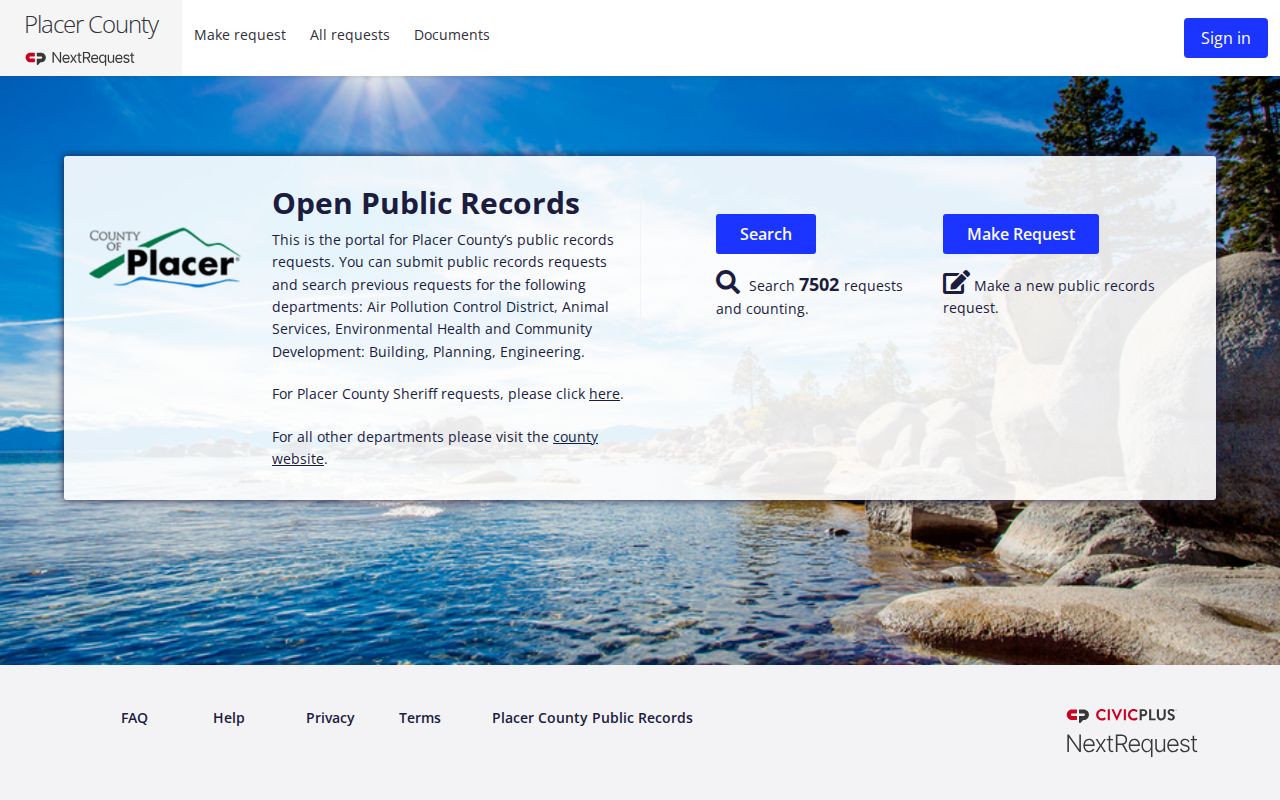
The request portal shows only the submission layer. The department still controls inspection, exemptions, and production. California's Public Records Act FAQ explains requester rights and exemptions, while the text of Government Code §7922.535 supplies the ten-day determination rule.
Older Placer County Directory Trails
Think of printed directories as snapshots of a single year, not a countywide roll that never skips. The Placer County Library offers Ancestry Library Edition access in the building. That subscription includes U.S. city directories. The Archive's genealogy inventory adds a Personal Name Index to the 1856 City Directories of California. It also holds cemetery books and society newsletters. Treat those as catalog leads rather than confirmed coverage. Ask staff whether a title actually covers Auburn, Roseville, Lincoln, Rocklin, Colfax, Tahoe City, or another community. Do that before you call an entry a Placer County match.
A county-hosted report lists Haines criss-cross editions for 1970, 1974, 1980, 1985, and 1989. It then lists Cole Information Services editions for 1992, 1995, 1999, 2003, 2008, and 2013. So address-keyed volumes clearly existed and stayed in use. The list does not guarantee a complete shelf run for every community, though. One directory year can give you a name, a spouse notation, an occupation, an address, and sometimes a reverse entry keyed to the street. Census schedules through 1950 help bridge the ten-year gaps between directory years.
The collections, entry conventions, Sanborn map links, and a household-tracing method are gathered on the Placer County city directory collections page. Sanborn sheets pin down an old street name or building footprint. The directory or assessment roll supplies the person connection.
Lawful personal use. Public records support genealogy, civic research, family reconnection, property history, and safety awareness. California Penal Code §646.9 and related laws do not permit stalking, surveillance, threats, repeated unwanted contact, or harassment. Protected residents and confidential records must remain protected.
Think of a Placer County residents directory as a trail of named sources rather than one lookup. Date, record role, and custodian belong beside every result. Before you rely on anything, confirm the details with the Placer County office that holds the record.